Ravana Dahanam
Why do we celebrate Dussehra?
One day. Many victories of good over evil.
Three victories, one festival
Rama, Durga and the Pandavas: three triumphs of good over evil. A few minutes to read them all.
 I
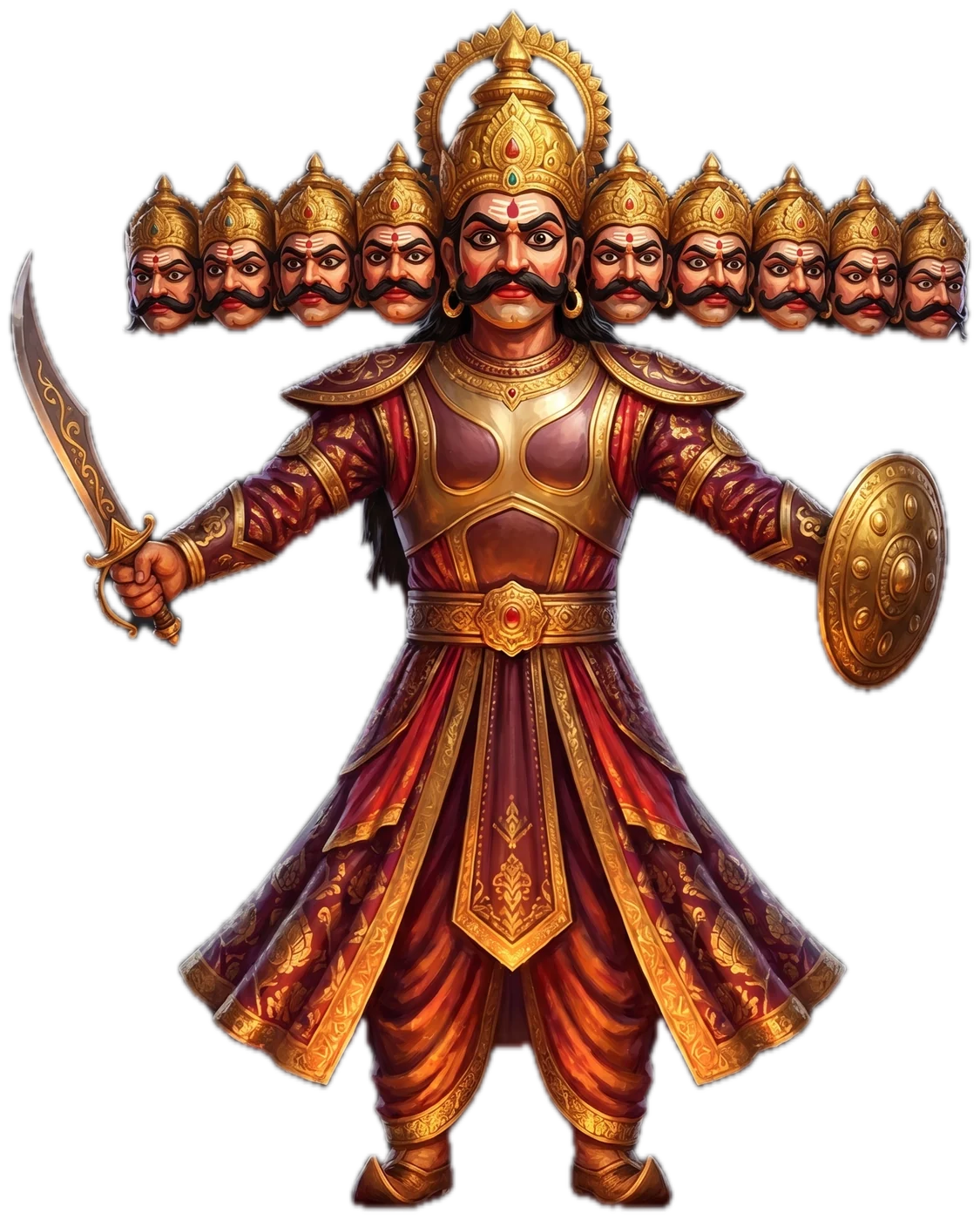
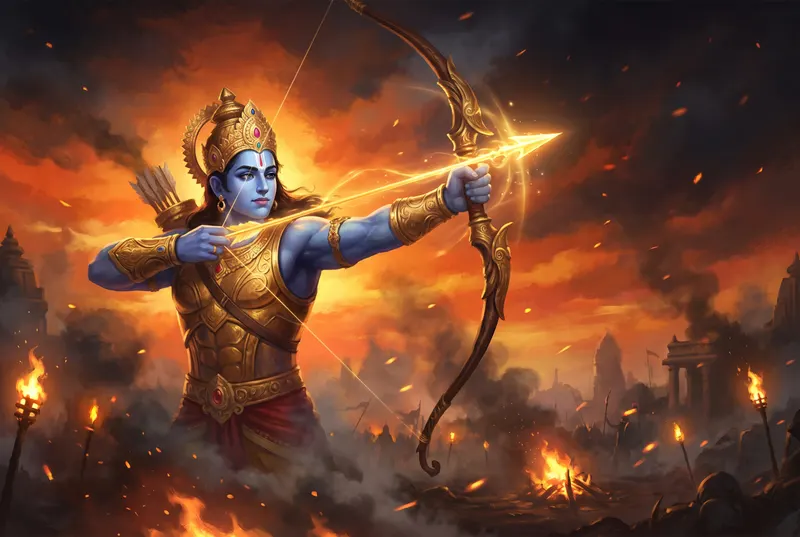
Rama defeats Ravana
Ten heads that kept growing back, and the one arrow that ended it.
Read more →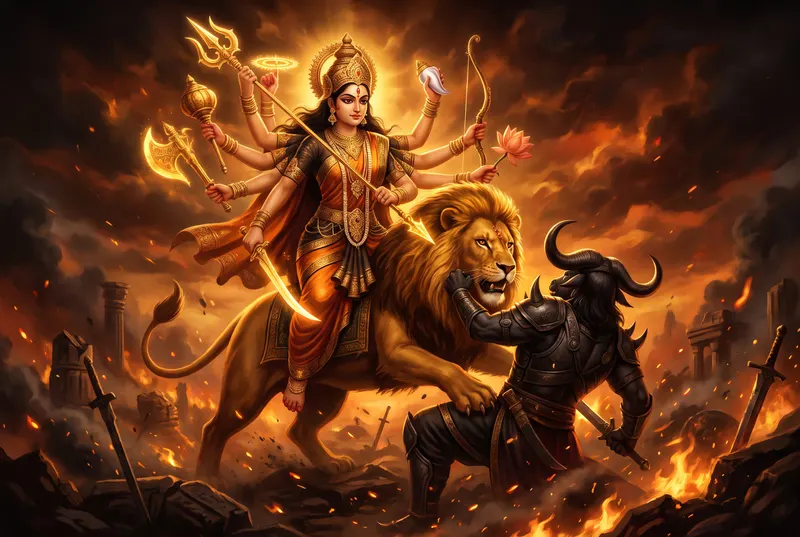 II
Durga defeats Mahishasura
A demon no god could beat, a goddess made of light, and nine nights of battle.
Read more →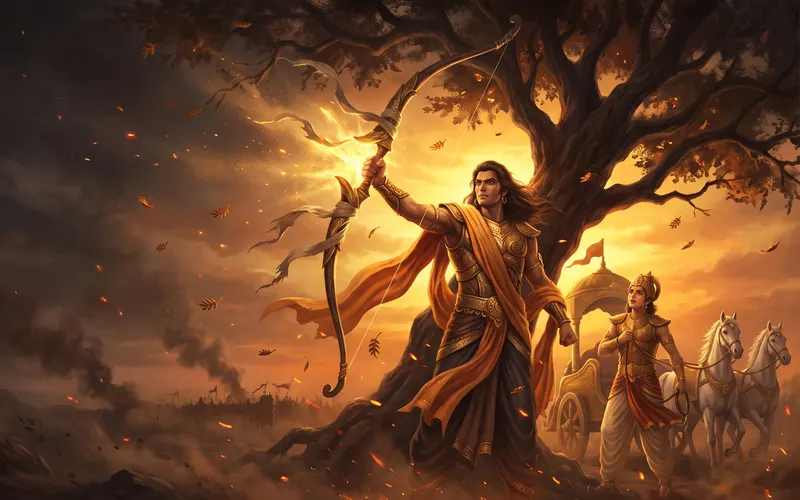 III
The Pandavas reclaim their weapons
A bow hidden in a tree, a secret year, and one archer against a whole army.
Read more →Rama’s arrows cut off Ravana’s heads, and they grew back. Then he aimed for the heart.
Ravana Dahan reminds us that evil, however mighty, burns away when we strike at its root. Do your own Ravana Dahanam online: aim for the heart and let goodness win.
Play Ravana DahanamDussehra questions, answered
Why is Dussehra celebrated?
Dussehra celebrates the victory of good over evil. It remembers three victories: Lord Rama defeating Ravana, Goddess Durga defeating the demon Mahishasura, and Arjuna taking back his weapons from the Shami tree at the end of the Pandavas’ exile.
Why is Dussehra also called Vijayadashami?
Vijaya means victory and Dashami means the tenth day. Dussehra falls on the tenth day of the bright half of the month of Ashvin, right after the nine nights of Navratri, so it is the tenth day of victory.
What is Ravana Dahan?
Ravana Dahan is the burning of a giant effigy of Ravana at sunset on Dussehra, often with fireworks. In North India it ends the Ramlila plays performed during Navratri, and it marks the end of evil.
What do Ravana’s ten heads stand for?
In a popular way of telling the story, Ravana’s ten heads stand for ten vices: ego, desire, anger, greed, attachment, pride, jealousy, selfishness, injustice and cruelty. Burning the effigy is a promise to let them go.
Why is the Shami tree worshipped on Dussehra?
The Pandavas hid their weapons in a Shami tree during their year in disguise, and Arjuna is believed to have taken them back on Vijayadashami. So families pray at the Shami tree and share its leaves as a sign of victory and good luck.
How is Dussehra celebrated across India?
North India burns Ravana effigies after the Ramlila. Bengal celebrates Durga Puja and says goodbye to the goddess on Vijayadashami. Mysuru holds the royal Jamboo Savari elephant parade, South India honours tools and books with Ayudha Puja the day before, Kerala begins children’s learning with Vidyarambham, and in Telangana families share Jammi (Shami) leaves after the evening puja.