
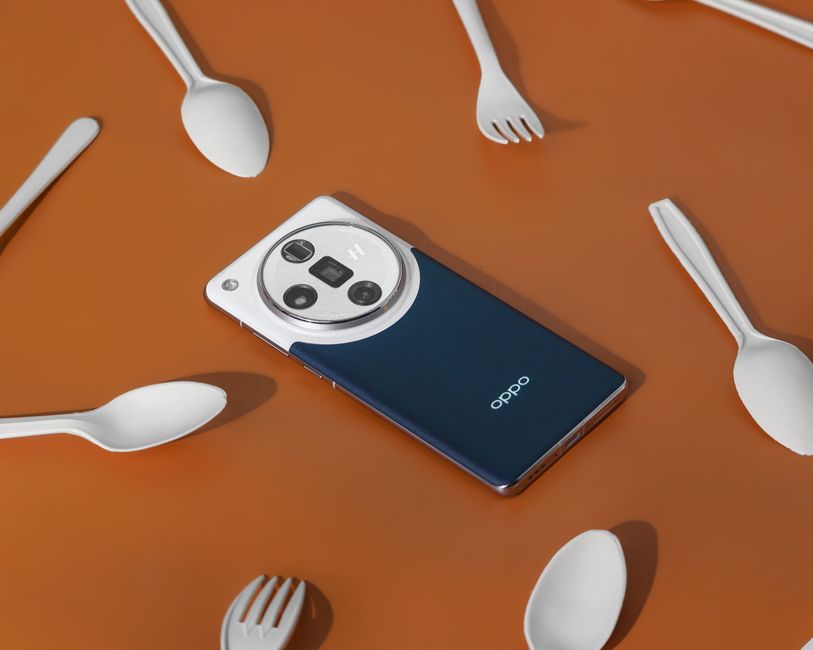
Oppo Find X9 Ultra: A Brilliant Diamond with a Hefty Price Tag – Is the 'Ultra' Era Reaching Its Limit?
In the ever-accelerating world of smartphones, new flagships constantly vie for attention, promising groundbreaking innovation and unparalleled performance. Yet, few devices spark as much conversation, and indeed, contention, as those bearing the coveted 'Ultra' moniker. The Oppo Find X9 Ultra is the latest entrant to ignite this debate, a device that has undeniably captured imaginations but whose price tag is proving to be a significant hurdle for many potential buyers. A recent poll conducted by GSMArena, published on May 10, 2026, vividly illustrates this dichotomy: while two-thirds of voters expressed interest in the device, a stark reality emerged – only half of those interested believed they could actually afford it. This isn't merely an Oppo-specific challenge; it's a microcosm of a broader trend sweeping across the 'Ultra-class' smartphone segment, forcing consumers and manufacturers alike to re-evaluate the delicate balance between cutting-edge technology and practical affordability.
The Allure of the Ultra: Unpacking Premium Innovation
What exactly defines an 'Ultra-class' smartphone, and why do these devices command such intense interest, despite their prohibitive costs? The answer lies in their uncompromising pursuit of technological supremacy. The Oppo Find X9 Ultra, like its peers, comes packed with the absolute latest and greatest hardware money can buy. This includes mind-blowing camera systems that push the boundaries of mobile photography, often incorporating advanced sensors, computational photography algorithms, and sophisticated optics developed in partnership with renowned imaging brands like Hasselblad – a collaboration Oppo has leveraged, even offering freebies like the Hasselblad Earth Explorer Kit to sweeten the deal for the X9 Ultra.
Beyond photography, these devices boast stunning displays, typically featuring high refresh rates, vibrant color accuracy, and peak brightness levels that redefine visual immersion. Powering this visual feast and every other demanding application are processors that, as the existing article aptly puts it, "could power a small spaceship." These are the most advanced mobile chipsets available, designed to handle everything from intensive gaming and complex AI tasks to seamless multitasking with effortless grace. For the hardcore tech enthusiast or the professional whose livelihood depends on having every ounce of performance and the best possible tools at their fingertips, the X9 Ultra represents a dream device, a no-compromise machine built for peak performance.
The Price Tag Problem: A Deep Dive into Consumer Sentiment
Despite the undeniable brilliance of the Oppo Find X9 Ultra's specifications, its price remains the elephant in the room. The GSMArena poll results are unequivocal: interest is high, but affordability is low. The device carries a substantial price tag, with the source mentioning a figure of €1,700 that people are actively looking for ways to justify. This justification often comes in the form of trade-in bonuses or the aforementioned promotional freebies, indicating that the sticker price alone is a significant psychological barrier.
To put this into perspective within Oppo's own lineup, the Find X9 is available for ₹75,000, while the Find X9 Pro sells for ₹110,000. The jump to an 'Ultra' model, even without official Indian pricing for the X9 Ultra at the time of the poll results (May 10, 2026), clearly places it in a different league, far exceeding what many consumers are willing or able to spend. The poll highlighted that while two-thirds were interested, only half of those interested voters felt they could afford it, meaning only about a third of the total polled audience was both interested and able to consider a purchase. This stark reality underscores a growing disconnect between technological aspiration and economic practicality.
Beyond the X9 Ultra: Navigating Oppo's Portfolio and Market Alternatives
The Oppo Find X9 Ultra doesn't exist in a vacuum; it's part of a broader family of devices, and consumer interest isn't solely focused on the top-tier model. The poll also shed light on other Oppo offerings and how they fare in the market's perception. The Oppo Find X9s, for instance, garnered only a small percentage of voter interest. While this fraction could potentially grow with positive reviews and a price cut, it's clear it wasn't a primary draw. Interestingly, it wasn't the similar Find X9 that diverted attention, but rather the Find X9s Pro. This "mini flagship" proved to be a bigger threat, with more people expressing interest in it than in the larger X9s. However, a significant caveat exists for these interested consumers: the X9s Pro will only be sold in China, limiting its global appeal.
Furthermore, the poll revealed a critical sentiment: about a third of voters have simply decided to look at other phones entirely. For this segment, even good reviews and attractive deals on the Oppo Find X9s (or presumably the X9 Ultra) won't change their minds. This indicates a deep-seated price sensitivity and a willingness to explore alternatives outside of Oppo's ecosystem. While some are looking at other Ultra models, such as the vivo X300 Ultra (which costs even more), these constitute a minority, reinforcing the idea that extreme pricing, regardless of brand, is a significant deterrent for the majority.
The Broader 'Ultra-Class' Conundrum: A Market Trend at a Crossroads
The Oppo Find X9 Ultra's situation is emblematic of a wider phenomenon. The GSMArena article explicitly states, "We know that everything has been getting more expensive lately, but the prices of Ultra-class phones have gone too high for many who are interested in getting one." This isn't just about Oppo; it's a trend observed across the board with 'Ultra-class' smartphones from various manufacturers. The relentless pursuit of incremental upgrades – a slightly better camera sensor, a marginally faster processor, a brighter display – comes at a cost that seems to be outstripping the perceived value for a growing segment of the market.
For many, the incremental improvements offered by an 'Ultra' model over a 'Pro' or even a standard flagship simply don't justify the substantial price jump. The market might be reaching a saturation point where even dedicated tech enthusiasts are questioning the value proposition. While manufacturers continue to push the boundaries of what's possible in a smartphone, the economic realities for consumers are becoming increasingly stark. This forces a difficult choice: weigh truly exceptional, bleeding-edge performance against practical affordability and the diminishing returns of each successive upgrade.
Weighing Value Against Innovation: The Consumer's Dilemma
The core of the 'Ultra-class' dilemma lies in this fundamental conflict. On one hand, there's the undeniable appeal of owning the pinnacle of smartphone technology – a device that represents the zenith of engineering and design. For a specific niche, such as professional photographers, content creators, or power users who demand the absolute best for their work or passion, the investment in a device like the X9 Ultra might be justifiable. These users often leverage every ounce of performance and every advanced feature, making the cost a necessary business expense or a deeply satisfying personal indulgence.
However, for the average user, the calculus is very different. The poll results clearly suggest that the price is a significant barrier, pushing them to consider more budget-friendly, albeit slightly less cutting-edge, alternatives. These alternatives, often 'Pro' or even standard flagship models from the same or competing brands, offer 90-95% of the 'Ultra' experience at a fraction of the cost. The perceived value of those last few percentage points of performance or a specific niche feature simply doesn't outweigh the financial strain for the majority. Consumers are becoming savvier, recognizing that while the 'Ultra' offers brilliance, its practical utility for daily tasks may not warrant the premium expenditure.
Looking Ahead: Implications for Oppo and the Premium Smartphone Market
The findings from the GSMArena poll present a clear challenge for Oppo and other manufacturers operating in the premium 'Ultra-class' segment. Shortly after the poll was posted, Oppo announced that the Find X9 Ultra and Find X9s would be launching in India on May 15, though official pricing information was still pending. The reception of these devices in a crucial market like India, particularly the X9 Ultra's final price point, will be a critical test of consumer willingness to embrace such high-end offerings.
This situation prompts a broader industry reflection: how can innovation continue without alienating the very consumers it aims to serve? Manufacturers may need to reconsider their pricing strategies, perhaps focusing on more tangible, universally beneficial innovations rather than incremental, niche-focused upgrades that inflate costs. The market is signaling that while brilliance is admired, affordability is paramount. The future of the 'Ultra-class' smartphone may depend on finding a new equilibrium where cutting-edge technology can be delivered without pushing consumers past their financial breaking point, or risk seeing a significant portion of their potential audience opt for equally brilliant, but more reasonably priced, alternatives.